
Long Term Care Specialists: A Guide to Future-Proofing Your Health
Why Long Term Care Specialists Matter for Your Future Health
Long term care specialists are healthcare professionals trained to support older adults and people with chronic conditions who need help with everyday activities like bathing, dressing, eating, and managing medications.
Here is a quick overview of what they do and who they are:
- Geriatricians – Doctors who focus on the complex health needs of older adults
- Nurse practitioners & physician assistants – Provide day-to-day medical care in nursing homes and assisted living
- Consultant pharmacists – Manage medications and reduce harmful drug interactions
- Physical & occupational therapists – Help patients stay mobile and independent
- Social workers – Coordinate care transitions, family support, and community resources
- Nursing home medical directors – Oversee clinical quality and regulatory compliance across a facility
These specialists often work together as an interdisciplinary team, coordinating care across home, community, and residential settings to improve quality of life and prevent unnecessary hospital visits.
Long-term care is not just a concern for the very old or very sick. Research shows that more than half of the population will enter a nursing home at some point in their lives. Whether the need arises gradually from aging or suddenly after a stroke or fall, having the right specialists in place makes a real difference.
I’m Scott Lunsford, an independent insurance professional based in Chillicothe, Ohio, with over 35 years of experience helping families plan for retirement and healthcare costs, including navigating the financial side of working with long term care specialists. In this guide, I’ll walk you through everything you need to know to make informed decisions for yourself or a loved one.
Understanding Long-Term Care and Who Needs It
Long-term care (LTC) isn’t a single service; it’s a variety of supports designed to meet health or personal care needs during periods when a person can no longer perform everyday activities on their own. These activities, often called Activities of Daily Living (ADLs), include essential tasks like bathing, dressing, using the bathroom, and eating.
According to scientific research on long-term care needs and planning, the need for these services can arise in two primary ways:
- Gradual Onset: This is often linked to the natural process of aging. It might start with a bit of frailty or mild cognitive changes that slowly make it harder to manage a household or personal hygiene.
- Sudden Events: A sudden medical crisis, such as a stroke or a heart attack, can instantly change a person’s functional abilities, requiring immediate and intensive support from long term care specialists.
Conditions like Alzheimer’s disease and other forms of dementia are significant drivers for LTC. Because these conditions are progressive, early planning is vital while the individual can still participate in the decision-making process.
Statistics show that more than half of the population moves to a nursing home at some point in their lives. While many of us hope to “age in place” in our own Ohio homes, achieving that goal often requires a mix of informal caregiving from family and friends and formal services from professionals. We always encourage healthy aging habits—like good nutrition and regular exercise—to help delay the need for intensive care, but having a plan for when those needs arise is the best way to ensure your wishes are respected.

The Role of Long Term Care Specialists in Modern Medicine
The world of long-term care has changed dramatically over the last decade. In the past, different providers often worked in “silos,” rarely communicating with one another. Today, the gold standard is the interdisciplinary team. This group of long term care specialists works together to manage high-acuity patients—those with complex, overlapping medical needs.
The primary goal of these teams is to improve patient outcomes, prevent unnecessary hospital readmissions, and enhance the overall quality of life. For residents in Skilled Nursing Facilities (SNFs), this coordination is critical. When a patient is discharged from a hospital to a nursing home, the transition is a high-risk period for medical errors. A cohesive team ensures that the care plan remains consistent and that any red flags are caught early.
You can find more info about long-term care categories to see how these roles fit into the broader healthcare landscape. Essentially, these specialists shift the focus from merely “curing” a disease to maximizing a person’s ability to function and enjoy their daily life.
Primary Care Long Term Care Specialists
At the heart of the LTC team are the primary care providers. These are the professionals who see the patients most frequently and make the big-picture clinical decisions.
- Geriatricians: These are physicians with specialized fellowships in aging. They are experts at distinguishing between normal signs of aging and actual disease symptoms.
- Nurse Practitioners (NPs) & Physician Assistants (PAs): These providers often serve as the “boots on the ground” in facilities. NPs undergo extensive training, often earning a master’s or doctoral degree, while PAs complete rigorous medical programs. They provide the day-to-day oversight that keeps chronic conditions stable.
- Medical Directors: Every nursing facility is required to have a medical director. In some areas, like Maryland, they are even required to be a Certified Medical Director (CMD). While Ohio’s requirements differ, a CMD certification shows a physician has gone above and beyond to master the regulatory and clinical complexities of long-term care.
If you are looking for providers in your area, you can find local support via the Eldercare Locator to see which specialists are available near Chillicothe or elsewhere in Ohio.
Specialized Support from Long Term Care Specialists
Beyond the doctors and nurses, several other specialists play “make or break” roles in a senior’s health.
- Consultant Pharmacists: This is a role many people overlook. Residents in skilled nursing facilities take an average of 8 to 10 medications per day. This “polypharmacy” can lead to dangerous drug interactions. A consultant pharmacist (often a PharmD) performs medication reconciliation, ensuring that every pill is necessary and safe.
- Therapists: Physical therapists help with mobility after a fall or surgery, while occupational therapists help patients relearn how to handle daily tasks like buttoning a shirt or using kitchen utensils.
- Social Workers: They are the glue that holds the family and the facility together, helping with everything from insurance forms to emotional support during difficult transitions.
| Specialist Role | Primary Responsibility | Key Focus Area |
|---|---|---|
| Geriatrician | Medical Oversight | Complex chronic disease management |
| Consultant Pharmacist | Medication Review | Preventing polypharmacy & drug errors |
| Physical Therapist | Mobility Training | Fall prevention and strength |
| Social Worker | Resource Coordination | Family support and discharge planning |
| Dietitian | Nutritional Planning | Preventing undernourishment in seniors |
Navigating the Spectrum of Long-Term Care Services
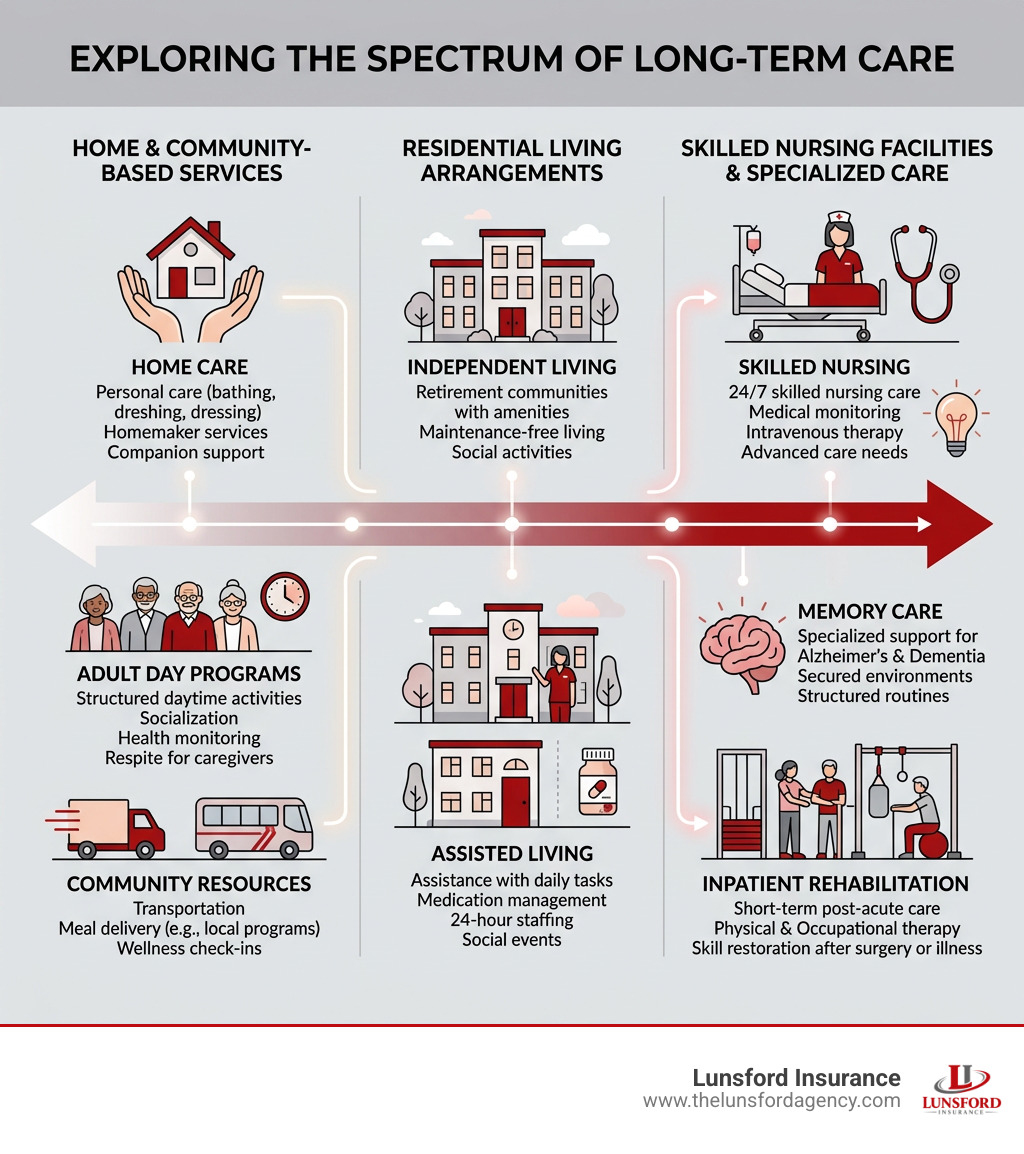
When people hear “long-term care,” they often think only of nursing homes. However, the spectrum is much broader. Most people start with home-based care, where formal or informal caregivers assist with chores and personal care.
As needs increase, families might look into community services like adult day care, which provides social interaction and supervision during the day. If staying at home is no longer safe, residential options come into play:
- Assisted Living: Best for those who need some help with ADLs but don’t require 24/7 medical supervision.
- Skilled Nursing Facilities (SNFs): These provide high-level medical care for those with significant physical or cognitive impairments.
To get a better handle on these transitions, we recommend families explore the Caregiver’s Handbook. It offers practical advice on finding support and taking care of yourself while caring for a loved one.
International Models vs. US Care
It’s helpful to look at how other countries handle these challenges. For instance, the Netherlands is world-renowned for its “elderly care physicians”—medical specialists trained specifically for long-term care. While the US relies heavily on a mix of geriatricians and general practitioners, the Dutch model integrates these physicians directly into the nursing home fabric.
In the US, long-term care is the second-largest sector in healthcare expenditure, trailing only medical specialist care. This high cost is why planning is so critical for Ohio residents. Whether you are looking at providers in Oklahoma or right here in Chillicothe, the goal remains the same: balancing high-quality medical intervention with the personal dignity of the patient. You can learn about Medicare coverage to see what the federal government contributes, but Medicare’s LTC coverage is often limited to short-term rehab.
Planning and Financing Your Future Care
The biggest hurdle for most families isn’t finding long term care specialists; it’s figuring out how to pay for them. Long-term care is expensive, and many people mistakenly believe that Medicare will cover everything.
In reality, paying for care usually requires a “braided” approach:
- Personal Savings & Annuities: Using your own assets to fund care.
- Long-Term Care Insurance: Policies specifically designed to cover these costs. You can find more info about long-term care insurance in Ohio on our website.
- Government Programs: This includes Medicaid (for those who meet income requirements) and U.S. Department of Veterans Affairs geriatrics benefits for those who served.
It is vital to understand the essential coverage types for long-term care in Ohio before a crisis hits. Planning ahead allows you to protect your assets and ensures you have the funds to choose the quality of care you want.
Frequently Asked Questions about Long Term Care Specialists
What is the difference between a geriatrician and a long term care specialist?
A geriatrician is a specific type of doctor who has completed a fellowship in elderly care. A long term care specialist is a broader term that can include geriatricians, but also includes nurse practitioners, pharmacists, and therapists who specialize in the long-term care environment.
How do long term care specialists manage polypharmacy in seniors?
They use a process called medication reconciliation. A consultant pharmacist reviews all 8–10 (or more) medications a resident may be taking to look for duplicates, unnecessary prescriptions, or drugs that might cause falls and confusion.
When should a family start looking for long term care specialists?
Ideally, you should start looking before you need them. If you or a loved one are starting to struggle with “instrumental” tasks like managing bills or medications, it’s time to consult a geriatrician or a social worker to discuss future needs.
Conclusion
Future-proofing your health isn’t just about medicine; it’s about preparation. By understanding the roles of long term care specialists and the spectrum of services available in Ohio, you can take control of your future.
At Lunsford Insurance, we specialize in helping Ohio seniors navigate these complex waters. From finding affordable, no-exam life insurance policies to setting up annuities that provide a steady stream of income for care, our goal is to provide personalized brokerage with a warm, human touch. Don’t wait for a medical emergency to start your plan. Consult a Financial Planner in Ohio today to ensure your health and your assets are protected for years to come.