

Navigating the 2026 Medicare Advantage Maze
Navigating the 2026 Medicare Advantage Maze: What You Need to Know
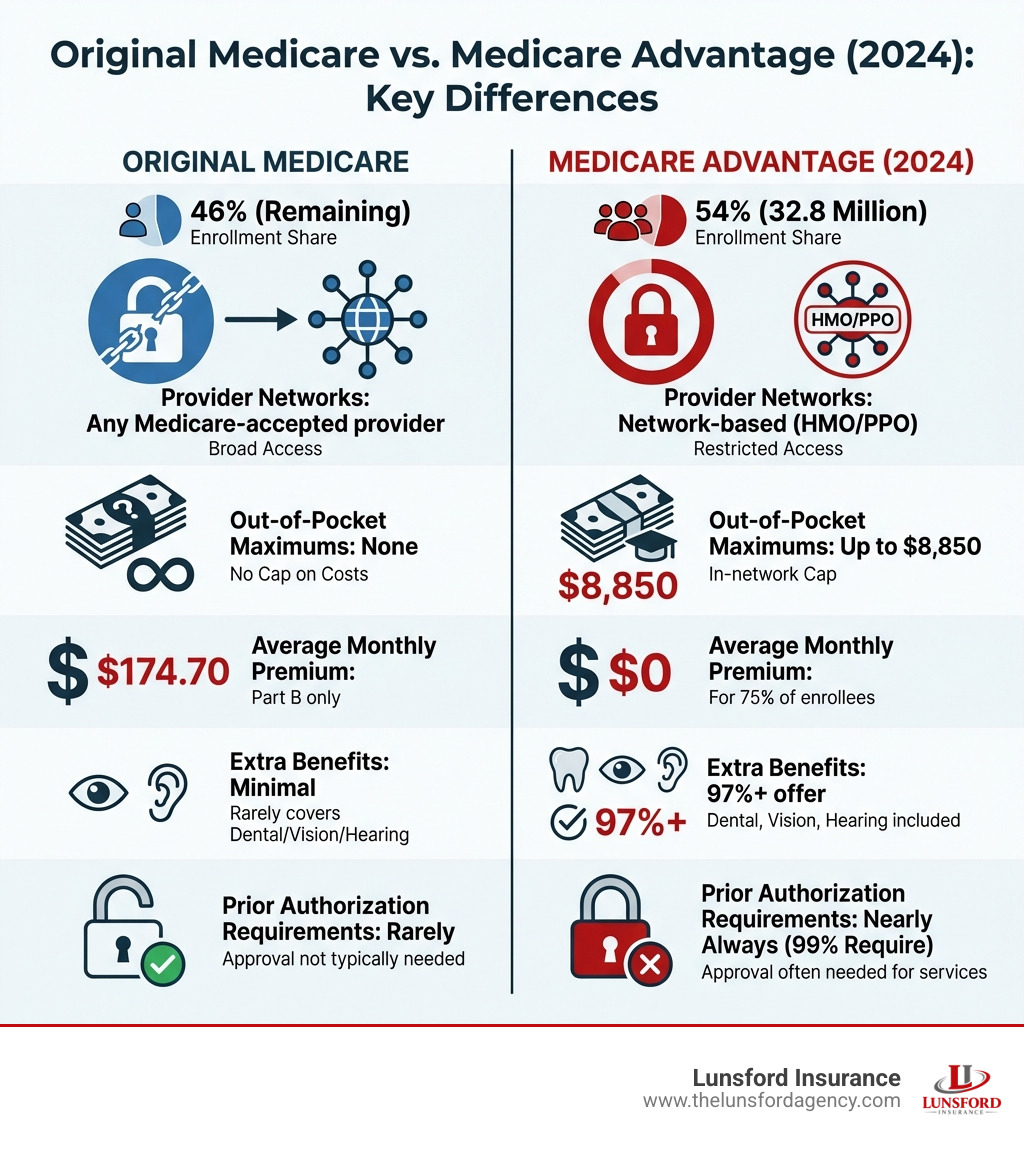
Medicare advantage plans in 2024 represented a major shift in how Americans get their health coverage after 65, and as we move through 2026, understanding that foundation is key to comparing your current options:
| Feature | Original Medicare | Medicare Advantage (2026 Context) |
|---|---|---|
| Offered by | Federal government | Private insurers |
| Provider access | Any Medicare-accepted provider | Network-based (HMO/PPO) |
| Out-of-pocket maximum | None | Regulated annual caps |
| Extra benefits (dental, vision, hearing) | Rarely | 97%+ of plans |
| Average monthly premium | Part B only | $0 for many enrollees |
| Prescription drug coverage | Separate Part D needed | Included in most plans |
| Prior authorization required | Rarely | Nearly always (99% of plans) |
Since the surge in medicare advantage plans 2024, where 32.8 million people (54% of beneficiaries) enrolled, the trend toward private coverage has only intensified. That growth makes sense; many plans charge no extra premium, bundle dental and vision, and cap your out-of-pocket costs.
However, there are real trade-offs: narrower provider networks, managed care rules, and prior authorization requirements that traditional Medicare doesn’t have. Picking the wrong plan can cost you in money, access, or both.
I’m Scott Lunsford, founder of The Lunsford Agency in Chillicothe, Ohio. With over 35 years helping Ohio seniors navigate these decisions, I’ll walk you through how the landscape has evolved since the benchmark of medicare advantage plans in 2024 so you can choose your 2026 coverage with confidence.
Understanding Medicare Advantage Plans in 2026: The Basics
At its heart, Medicare Part C—better known as Medicare Advantage—is an alternative way to receive your Medicare benefits. Instead of the federal government paying your doctors directly, they contract with private insurance companies to manage your care.
According to the Medicare enrollment dashboard, these plans officially crossed the majority market share milestone during the era of medicare advantage plans in 2024. In 2026, they remain the dominant choice for more than half of the eligible population, including many of your neighbors here in Ohio.
When you join one of these plans, you are still in the Medicare program. You still have Medicare rights and protections, and you still get all your Medicare services covered under Part A (hospital) and Part B (medical). The difference is in how those services are delivered and what extras are tacked on.
Who Can Enroll in 2026?
Eligibility remains consistent with the standards set for medicare advantage plans in 2024. To join, you must:
- Be entitled to Medicare Part A and enrolled in Part B.
- Be a U.S. citizen or lawfully present in the country.
- Live in the plan’s specific service area (for us, that means specific counties in Ohio).
There are specific times you can jump in. The Initial Enrollment Period starts three months before you turn 65 and ends three months after. If you miss that, the Annual Enrollment Period (AEP) runs from October 15 to December 7 each year. There is also a Medicare Advantage Open Enrollment Period from January 1 to March 31, where current members can switch plans or go back to Original Medicare.
How Medicare Advantage Differs from Original Medicare
The biggest “aha!” moment for many of our clients in Chillicothe is realizing that Medicare Advantage is “managed care.” In Original Medicare, you can see any doctor in the country who accepts Medicare. In an Advantage plan, you usually have a network of providers you must use to keep costs down.
Another massive difference is the financial safety net. Original Medicare has no limit on what you pay out of pocket in a year. You could potentially face unlimited 20% coinsurance bills. Medicare Advantage plans, by law, must have an out-of-pocket limit. However, there’s a catch: prior authorization. A recent OIG report on coverage denials found that 13% of denials for services that met Medicare coverage rules were inappropriate, a concern that has persisted since the 2024 plan year.
Comparing Plan Types: HMO, PPO, and SNPs
When you start shopping in 2026, you’ll notice the high volume of options that became standard with medicare advantage plans 2024, where the average beneficiary had access to 43 different plans. Most of these fall into three categories:
| Plan Type | Network Rules | Referrals Needed? | Out-of-Network Coverage? |
|---|---|---|---|
| HMO (Health Maintenance Organization) | Must use network providers | Usually yes | No (except emergencies) |
| PPO (Preferred Provider Organization) | Can use any provider | No | Yes (at a higher cost) |
| SNP (Special Needs Plan) | Restricted to specific groups | Usually yes | Generally no |
While HMOs historically made up the majority of the market, PPOs have continued to catch up as people seek more flexibility. Market concentration remains high, with nearly half of all enrollees nationwide staying with just two major firms.
Choosing the Right Plan for Your Health in 2026
Selecting a plan isn’t just about the premium; it’s about the “plumbing” of the network. If you have a favorite specialist at the Adena Regional Medical Center, you need to make sure they are in the plan’s directory.
A physician network analysis revealed that, on average, Advantage networks include fewer than half of the physicians in a given county. This is why we always tell our Ohio clients to double-check their specific doctors every single year, as networks can change without much notice.
The Rise of Special Needs Plans (SNPs)
One of the fastest-growing trends since the era of medicare advantage plans 2024 is the Special Needs Plan. Enrollment has surged, reaching millions of enrollees who require specialized care.
These are “boutique” plans tailored for specific situations:
- D-SNPs: For those “dual-eligible” for both Medicare and Medicaid.
- C-SNPs: For people with chronic conditions like diabetes or chronic heart failure.
- I-SNPs: For those living in an institution (like a nursing home).
According to the SNP comprehensive report, these plans often provide much higher levels of care coordination and extra benefits like transportation to doctor visits.
Costs and Benefits: What to Expect in 2026
Let’s talk money. The big draw for many, which peaked during the rollout of medicare advantage plans in 2024, is the $0 premium. A significant majority of plans continue to charge no monthly premium other than your standard Part B premium.
For current 2026 rates, you can find the full breakdown of Part B premium facts on the CMS website. The most important number for your budget, however, is the Maximum Out-of-Pocket (MOOP). While the legal ceiling for in-network services was $8,850 in 2024, the average enrollee’s limit often sits much lower, around $4,882.
Extra Perks in 2026 Medicare Advantage Plans
Why do people choose these plans? It’s the “extras.” Since traditional Medicare doesn’t cover most dental, vision, or hearing care, private plans use these benefits to compete for your business.
The 2024 spotlight trends showed that 97% or more of individual plans offer vision, dental, and fitness benefits like SilverSneakers. Many plans in 2026 have expanded these to include “Flex Cards”—pre-loaded debit cards for over-the-counter health items or healthy groceries.
Prescription Drug Coverage (Part D)
Most Medicare Advantage plans are “MA-PDs,” bundling hospital, medical, and prescription drug coverage. This is incredibly convenient, but you must ensure your specific medications are on the plan’s “formulary.”
By 2026, the full impact of the Inflation Reduction Act is in effect. Following the changes that began with medicare advantage plans in 2024, there is now a $2,000 out-of-pocket cap on prescription drugs. This is a massive relief for seniors on expensive specialty medications who previously faced much higher costs.
Quality and Performance: Navigating Star Ratings
How do you know if a plan is actually any good? Medicare uses a Star Rating system from 1 to 5 stars. These ratings are based on over 40 quality measures, including how well the plan manages chronic conditions and how members rate their experience.
The 2024 Star Ratings fact sheet showed an average rating of 4.04 stars. Interestingly, data shows that non-profit plans tend to perform better than for-profit ones. Experience also matters; plans that have been in the program for 10+ years are much more likely to have higher ratings than brand-new “disruptor” companies.
Evaluating Plan Quality in Ohio
Here in Ohio, we have some unique data points. For example, Summit County (the Akron area) has historically had some of the most plans available in the entire country.
The Ohio Department of Insurance is a great resource for local residents, but we also look at “boots on the ground” feedback. In counties like Stark or Ross, we see a wide variation in which hospital systems are “preferred” by certain plans. A 5-star plan isn’t very helpful if the best heart surgeon in Chillicothe isn’t in their network.
Frequently Asked Questions about Medicare Advantage
What are the main concerns with prior authorization?
The biggest concern is delay of care. Because 99% of enrollees are in plans that require “permission” for things like MRIs, skilled nursing stays, or expensive drugs, you might have to wait for an insurance clerk to approve what your doctor has already ordered. In some cases, as the OIG found, these requests are denied even when they should have been covered.
Do Medicare Advantage plans cost the government more?
Yes. Currently, Medicare Advantage plans cost the government about 6% more per beneficiary than traditional Medicare. This is largely due to “risk adjustment” payments and bonuses for star ratings. Research by MedPAC suggests that plans actually receive payments that are 122% of what it would cost to cover a similar person in traditional Medicare.
How do I switch from Original Medicare to an Advantage plan?
The easiest time is during the Annual Enrollment Period (Oct 15 – Dec 7). You simply choose a plan and enroll; you don’t even need to “cancel” your Original Medicare. However, we always caution our clients to check their “Medigap” rights first. If you leave a Medicare Supplement plan to try Advantage, you might not be able to get that Supplement back later if you change your mind, depending on Ohio’s underwriting rules.
Conclusion
Navigating the 2026 Medicare Advantage landscape doesn’t have to feel like a maze. While the options have evolved since the benchmark year of medicare advantage plans in 2024, the core goal remains the same: finding a plan that covers your specific doctors, includes your medications, and fits your monthly budget.
At Lunsford Insurance, we specialize in helping Ohio seniors find that perfect fit. Whether you are looking for Supplemental retirement plans Ohio or trying to decide between an HMO and a PPO in Chillicothe, we offer personalized brokerage with expert connections to all the major carriers.
We pride ourselves on offering affordable, no-exam senior policies and honest, expert advice. You’ve worked hard for your retirement—let’s make sure your healthcare works just as hard for you. Give us a call or stop by our office; we’re here to help you make sense of it all.