

Don’t Let Costs Supplement Your Stress: Affordable Medicare Supplements Explained
What Are Affordable Medicare Supplements — and Which Plans Are Worth Comparing?
Supplemental health insurance in Ohio can help cover some of the out-of-pocket costs Original Medicare does not pay. Affordable medicare supplements — also called Medigap plans — are private insurance policies that help pay the out-of-pocket costs Original Medicare does not cover, such as deductibles, coinsurance, and copayments.
Here is a quick overview of the most commonly compared low-cost Medigap options in 2026:
| Plan | Est. Monthly Premium Range* | Key Trade-Off |
|---|---|---|
| Plan G | Varies by age, location, carrier | Covers most costs after the Part B deductible ($283 in 2026) |
| Plan N | Typically lower than Plan G | Lower premium; up to $20 office copay / up to $50 ER copay |
| High-Deductible Plan G | Often among the lowest premiums | Full benefits kick in after a $2,740 deductible (2026 federal limit) |
| Plan K | Partial coverage; MOOP $6,940 | Covers 50% of most benefits; out-of-pocket cap limits risk |
| Plan L | Partial coverage; MOOP $3,470 | Covers 75% of most benefits; lower cap than Plan K |
*Premiums are examples only. Actual costs vary by age, gender, tobacco use, health status, and Ohio carrier. These figures are not promises or fixed prices.
Original Medicare covers roughly 80% of approved medical expenses, which means a hospital stay, specialist visit, or extended illness can leave you with bills that add up quickly — especially on a fixed income. The right Medigap plan can turn those unpredictable bills into a manageable, predictable monthly cost.
That said, not every plan fits every budget. The “most coverage” option is not automatically the smartest financial choice. The plans that work best for cost-conscious Ohio seniors depend on how often you use healthcare, how stable you need your monthly expenses to be, and whether you qualify for any government assistance programs that could reduce your costs before you even shop for a supplement.
This guide walks through how Medigap works, how the most popular plans compare, what enrollment timing means for your pricing, and what else Ohio seniors should know before making a decision.
I’m Scott Lunsford, an independent insurance professional based in Chillicothe, Ohio, and I’ve spent decades helping Ohio families find affordable medicare supplements and other coverage options that fit their real budgets. The sections ahead will give you the clear, practical information you need to compare your options with confidence.
Affordable medicare supplements terms made easy:
Understanding Affordable Medicare Supplements in Ohio
When we talk about the purpose of Medigap, it really comes down to budget management. For many Ohio seniors living on a fixed income, the biggest fear isn’t the monthly premium; it’s the “surprise” bill. Original Medicare has gaps—deductibles and coinsurance—that can lead to significant medical debt if you have a bad health year.
Standardized plans mean that a Plan G from one company offers the exact same core benefits as a Plan G from another company. This makes it easier for you to shop based on price and the company’s reputation for service. Since these plans are regulated, you don’t have to worry that a “cheaper” Plan N covers less than a more expensive one; the benefits are the same by law.
Working with an expert can help you navigate these choices. Understanding Why You Need a Medicare Broker in Your Corner is often the first step in avoiding overpayment.

How Medigap Works with Original Medicare
Medigap acts as a secondary payer. First, Medicare Part A (hospital insurance) and Part B (medical insurance) pay their share of your covered health care costs. Then, your Medigap policy steps in to pay its share.
One of the biggest advantages for seniors in Chillicothe and across Ohio is nationwide access. Unlike Medicare Advantage plans, which often use restricted provider networks, Medigap works with any doctor or hospital in the country that accepts Medicare. There are no referrals needed to see a specialist, which provides a high level of freedom.
Why Choosing the Right Plan Matters
Choosing the right plan is about finding the balance between what you pay now (premiums) and what you pay later (out-of-pocket costs). If you pick a plan with a very low premium but frequent $20 copays, and you visit the doctor twice a week, you might end up spending more than if you had a plan with a higher premium and no copays.
Long-term stability is also key. Some plans have lower initial rates but may have a history of higher annual increases. We help you look at the “total yearly cost” to ensure your coverage remains affordable as you age.
Comparing Standardized Medigap Plans: G, N, and F
In Ohio, most seniors focus on Plans G and N, as Plan F is only available to those who were eligible for Medicare before 2020. Each has a different approach to helping you save. For a deep dive, you can read Everything You Need to Know About Medicare Part G Ohio or visit the official Medicare.gov site to see the full benefit charts.
Plan G: Comprehensive Coverage for Ohio Seniors
Plan G is currently the most popular choice for new enrollees who want maximum protection. After you meet the annual Part B deductible ($283 example for 2026), Plan G typically covers 100% of your remaining Medicare-covered expenses. This includes the 20% coinsurance that Original Medicare doesn’t pay and “excess charges” that some doctors may bill. It offers the most predictable costs, as you’ll know exactly what your medical spending will be for the year once that deductible is met.
Plan N: Lower Premiums with Cost-Sharing
Plan N is often a great fit for budget-conscious seniors who don’t mind small copays. Premiums for Plan N are typically lower than Plan G. In exchange, you pay a copay of up to $20 for some office visits and up to $50 for emergency room visits that don’t result in an inpatient stay. Plan N also does not cover Part B excess charges. If you are healthy and don’t visit the doctor frequently, the premium savings on Plan N can outweigh the cost of the copays.
Plan F: Availability for Pre-2020 Enrollees
Plan F was the “gold standard” for years because it covered everything, including the Part B deductible. However, federal law changed, and now only those who were eligible for Medicare prior to January 1, 2020, can enroll in Plan F. While it offers maximum coverage, it often comes with much higher premiums. Many legacy enrollees find that switching to Plan G—even though they have to pay the deductible themselves—actually saves them money overall because the premium difference is so large.
Evaluating the Total Cost of Affordable Medicare Supplements
To find a truly affordable plan, you have to look beyond the monthly bill. You must consider the “Total Yearly Cost,” which includes premiums, deductibles, and potential copays.
| 2026 Cost Category | Plan G | Plan N | Plan K | Plan L |
|---|---|---|---|---|
| Est. Premium | High | Mid | Low | Mid-Low |
| Part B Deductible | You pay ($283) | You pay ($283) | You pay ($283) | You pay ($283) |
| Copays | $0 | Up to $20/$50 | 50% Share | 25% Share |
| Out-of-Pocket Limit | None | None | $6,940 (Example) | $3,470 (Example) |
Disclaimer: Plan availability, pricing, and eligibility vary by carrier, age, tobacco use, health status, and Ohio regulations.
Understanding 2026 Federal Plan Limits
For 2026, the federal government has set specific limits that affect your costs. The Part A hospital deductible is estimated at $1,736 per benefit period. The Part B medical deductible is estimated at $283 annually.
Plans K and L are unique because they have “Maximum Out-of-Pocket” (MOOP) limits. For 2026, these are estimated at $6,940 for Plan K and $3,470 for Plan L. Once you hit these limits, the plan pays 100% of covered services for the rest of the year. These are often considered affordable medicare supplements for those who want lower premiums and are willing to share more of the cost up-front.
How High-Deductible Plans Offer Affordable Medicare Supplements
If you are in good health and want to protect yourself against a “catastrophic” medical event without paying a high monthly premium, High-Deductible Plan G (HDG) might be an option. In 2026, the federal deductible for this plan is $2,740.
You pay all Medicare-covered costs out-of-pocket until you hit that $2,740 mark. Once met, the plan functions just like a standard Plan G. Because the deductible is high, the monthly premiums are often among the lowest available, sometimes under $100 depending on the carrier.
Factors That Influence Your Monthly Premium
Several things can change the price you are quoted:
- Age and Gender: Generally, premiums increase as you get older.
- Tobacco Use: Non-smokers often receive lower rates.
- Household Discounts: Many carriers offer a discount (typically 5% to 12%) if two people in the same household have policies.
- Pricing Methods: Carriers use different ways to set prices—some stay the same as you age (Issue-age), while others increase every year (Attained-age).
- EFT Savings: Many companies offer a small discount if you set up automatic payments from your bank account.
When to Enroll: The Medigap Open Enrollment Period
Timing is the single most important factor in getting affordable medicare supplements. Your Medigap Open Enrollment Period is a one-time, six-month window that starts the month you are both 65 or older and enrolled in Medicare Part B.

Finding Affordable Medicare Supplements During Open Enrollment
During this six-month window, insurance companies are prohibited from using medical underwriting. This means they cannot ask you health questions, look at your medical history, or charge you more for pre-existing conditions. You are guaranteed acceptance at the same rate as someone in perfect health. This is the best time to lock in a stable, affordable rate. We provide specialized Medicare Services to help you time this perfectly.
What Happens if You Miss Your Window?
If you apply for a Medigap policy after your open enrollment window has closed, carriers in Ohio can use medical underwriting. They can review your health history and may charge you a higher premium or deny your application altogether based on your conditions.
However, there are “Guaranteed Issue” rights. For example, if you lose employer coverage or your Medicare Advantage plan leaves the area, you may have a window to buy a Medigap plan without health questions. It is always worth checking if you qualify for one of these special circumstances before assuming you’ll be denied.
Beyond Health: Considering Final Expense Coverage
While we focus heavily on your health coverage, many Ohio families also worry about what happens at the end of life. It is important to distinguish between health insurance and legacy protection.
Transitioning from Health to Legacy Protection
While Medigap covers your medical bills and hospital stays, burial insurance (also known as final expense insurance) is a completely different product line. It is not a Medicare Supplement and does not pay for doctor visits. Instead, it provides a cash benefit to your family to help with funeral costs, remaining debts, or legal fees. Many seniors choose to add a small final expense policy alongside their Medigap plan to ensure their family isn’t burdened by these costs. You can find more info about life insurance services on our dedicated page.
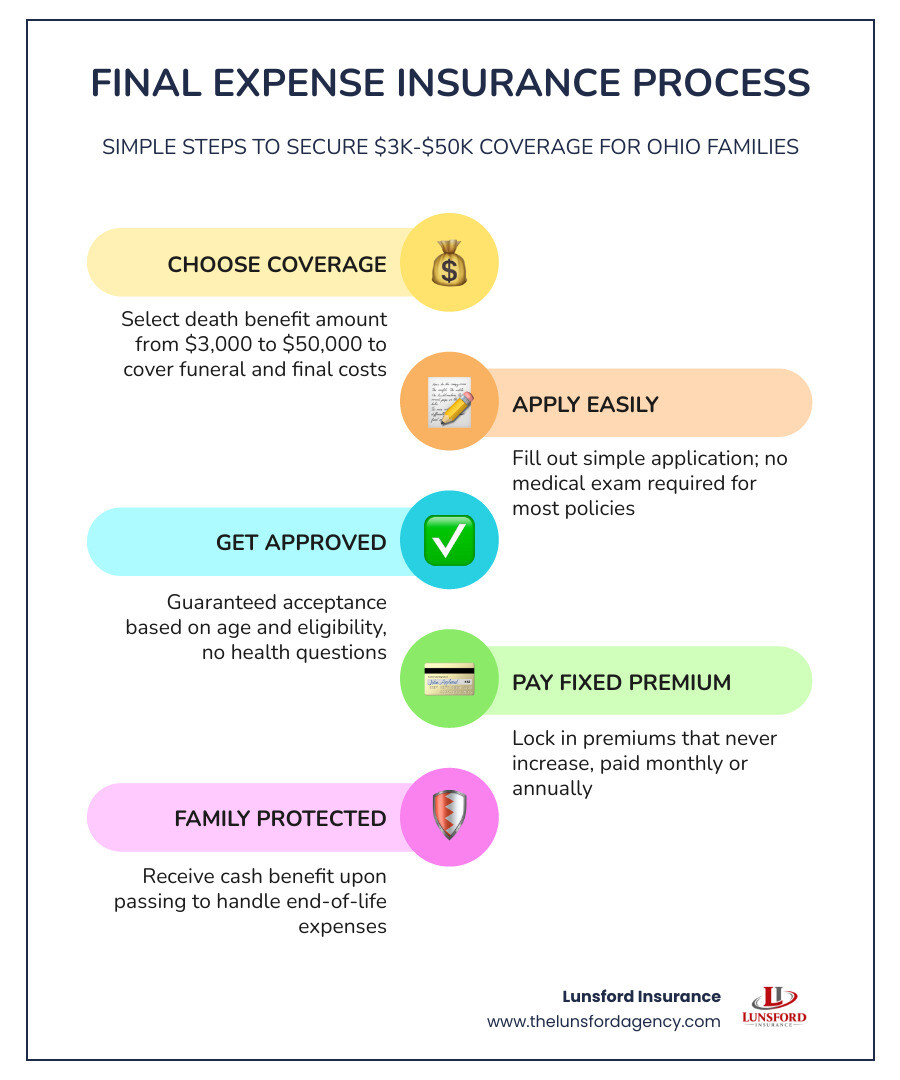
Simple Options for Ohio Families
For those concerned about health issues, there are “no-exam” final expense policies available in Ohio. These typically have fixed premiums that never increase and a death benefit that never decreases. As an independent broker, we look for options that provide peace of mind for your family without the stress of a medical exam.
Frequently Asked Questions about Affordable Medicare Supplements
Does Medigap cover prescription drugs or dental care?
No. Standard Medigap plans sold today do not include Part D prescription drug coverage. You must purchase a separate stand-alone Part D plan if you want drug coverage. Medigap also does not cover routine dental, vision, or hearing services (like checkups, glasses, or hearing aids). If these are important to you, you may need separate policies or you might look into Medicare Advantage plans.
Can I switch from Medicare Advantage to a Supplement plan?
Yes, but it can be tricky. You can usually only switch during the Annual Enrollment Period (Oct 15 – Dec 7) or the Medicare Advantage Open Enrollment Period (Jan 1 – Mar 31). However, in Ohio, unless you are in a “trial period” or have a guaranteed issue right, the Medigap company will likely require medical underwriting. This means if you have serious health issues, you might not be able to switch back to a Supplement plan easily.
Are Medigap premiums the same for every insurance company?
Absolutely not. Even though the benefits for Plan G are identical at every company, the price is not. One company might charge $120 a month while another charges $160 for the exact same coverage. This is why it is vital to compare multiple carriers. Local resources like our agency can help you run these side-by-side comparisons to find the right fit for your budget.
Conclusion
Finding affordable medicare supplements in Ohio doesn’t have to be a source of stress. By focusing on standardized plans like G and N, understanding the importance of your Open Enrollment window, and looking at the total yearly cost rather than just the monthly premium, you can secure coverage that protects both your health and your savings.
At Lunsford Insurance, we take pride in our Ohio roots and our ability to connect seniors in Chillicothe and beyond with carriers that fit their specific needs. We aren’t tied to one single insurance company; our goal is to find the plan that makes the most sense for your unique situation.

The best option depends on your Medicare status, budget, and whether you want predictable cost-sharing or cash-benefit protection. For personalized help, explore our Medicare Services or reach out for a no-pressure consultation.
Plan availability, pricing, and eligibility vary by carrier, age, tobacco use, health status, and Ohio regulations.