

Medicare Part D Ohio: Your Prescription for Lower Costs
What Is Medicare Part D in Ohio and What Does It Cover?
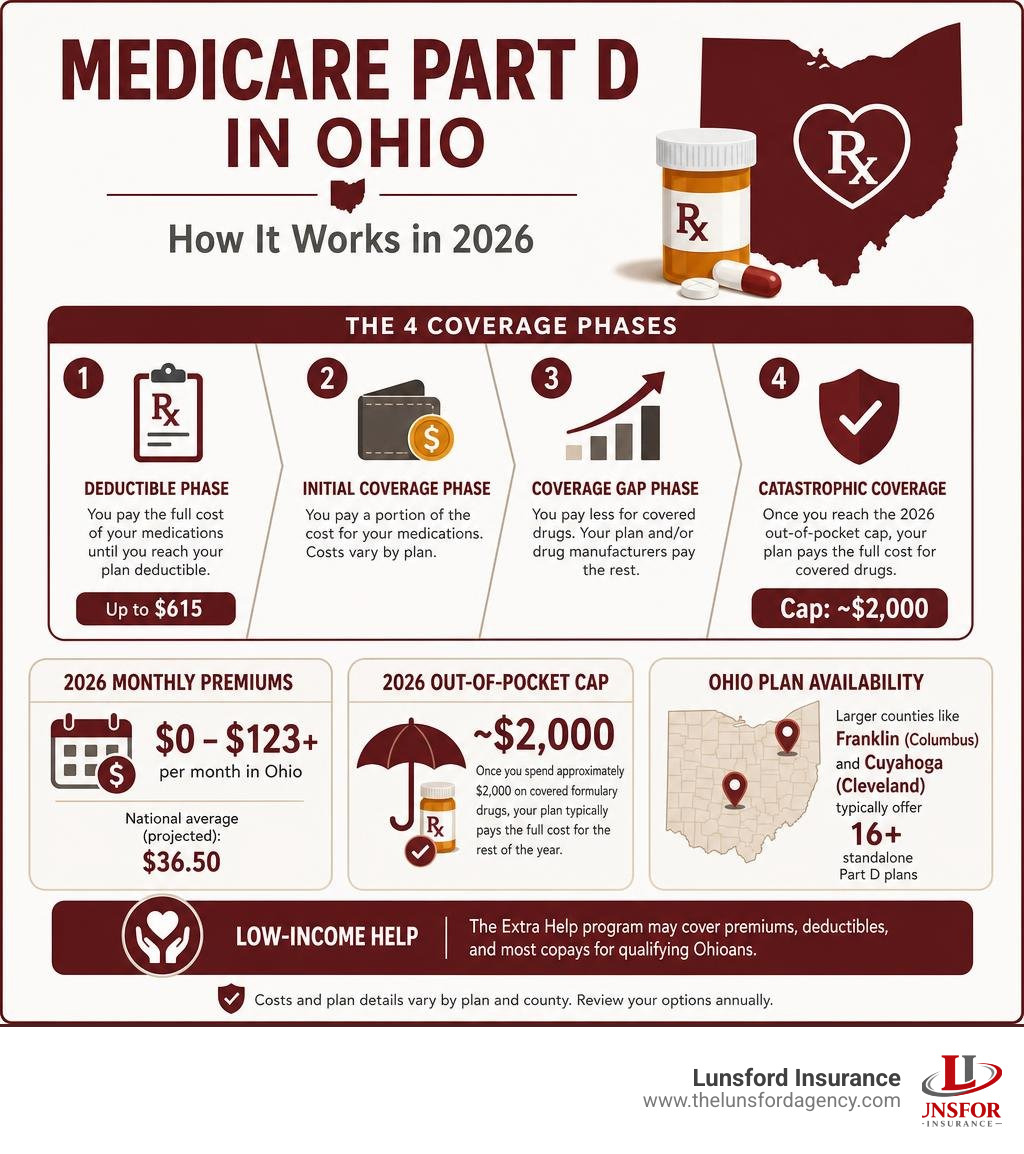
Medicare Part D in Ohio is optional prescription drug coverage available to anyone enrolled in Medicare, offered through private insurance companies approved by the federal government. Here is a quick overview of what you need to know:
- What it typically covers: Brand-name and generic prescription drugs on each plan’s formulary (drug list)
- Who may enroll: Anyone with Medicare Part A and/or Part B in Ohio
- How to get it: Typically through a standalone Prescription Drug Plan (PDP) paired with Original Medicare, or bundled into a Medicare Advantage plan
- 2026 monthly premiums: Vary widely depending on your specific county and ZIP code — with examples ranging from $0 to $123+ per month in Ohio (the national average is projected at $36.50)
- 2026 deductible: Up to the national maximum of $615 per year, though actual deductibles vary by plan and ZIP code, with some plans charging less or none at all
- 2026 out-of-pocket cap: A $2,000 cap that applies specifically to covered formulary drugs (not all medications in every circumstance); once you reach this limit, your plan pays the full cost of covered drugs for the rest of the year
- Plan availability: While larger Ohio counties like Franklin (Columbus) and Cuyahoga (Cleveland) typically offer 16 or more standalone Part D plans, options vary significantly by county and rural areas may have fewer choices
- Low-income help: The Extra Help program may cover premiums, deductibles, and most copays for qualifying Ohioans
Figuring out which plan actually saves you money typically takes more than a quick glance at the premium. The right Medicare Part D plan typically depends on which drugs you take, which pharmacy you use, and which county you live in — and the differences between plans may add up to hundreds of dollars a year.
Ohio seniors typically have more choices than most. Multiple private insurance companies compete for enrollment here, which may be good news for your wallet — but it also means the comparison process can feel overwhelming. Add in the 2026 changes brought by the Inflation Reduction Act, a new out-of-pocket cap, and the risk of a permanent late enrollment penalty, and it is easy to see why so many Ohioans want a clear, straightforward guide before they choose.
That is exactly what this guide is here to provide.
I am Scott Lunsford, founder of The Lunsford Agency in Chillicothe, Ohio. With over 35 years of experience in insurance and financial services, my goal is to help Ohioans understand their options and navigate Medicare Part D in Ohio with confidence. In the sections below, we will walk through how Part D works, what the 2026 plans look like, and how to find coverage that fits your prescriptions and your budget.
Medicare part d ohio terms to learn:
Understanding Medicare Part D Ohio and How It Works

When you enroll in Medicare, you quickly realize that Original Medicare (Part A and Part B) typically does not cover retail prescription drugs. To get this coverage, you typically look to the private market.
In Ohio, you can typically obtain this coverage in one of two ways. First, you may choose a standalone Prescription Drug Plan (PDP) to pair with your Original Medicare. Alternatively, you may enroll in a Medicare Advantage plan that bundles medical and drug coverage together.
Both options typically rely on private insurance companies approved by Medicare to deliver these benefits. Because these are private plans, they typically establish their own formularies, drug tiers, and pharmacy networks. To learn more about how these plans fit into your overall healthcare strategy, read about What’s Medicare Drug Coverage (Part D)? and discover Why You Need a Medicare Broker in Your Corner to help guide your choice.
What is Medicare Part D Ohio and Who is Eligible?
To sign up for a medicare part d ohio plan, you must typically meet a few basic eligibility requirements. First, you must typically be entitled to Medicare Part A and/or enrolled in Medicare Part B. Second, you must typically live in the service area of the plan you want to join.
For dual-eligible beneficiaries—individuals who qualify for both Medicare and Medicaid—the process is even simpler. The Medicare Part D – Ohio Department of Medicaid typically coordinates coverage and enrolls qualifying individuals into a plan to ensure they do not experience a gap in their medications.
Coverage Stages and the 2026 Out-of-Pocket Cap
Medicare Part D plans historically featured four distinct coverage stages, including the “donut hole.” However, the landscape looks much simpler now.
In 2026, the standard Medicare Part D structure typically consists of three main phases, highlighted by a major consumer protection: a $2,000 out-of-pocket cap on covered formulary drugs. Once your out-of-pocket spending on covered medications reaches this $2,000 threshold, your plan typically pays 100% of your covered drug costs for the rest of the calendar year. Note that this cap applies specifically to covered formulary drugs, rather than all medications in every circumstance.
Table is for illustrative comparison only.
| 2026 Coverage Phase | How It Works | What You Pay |
|---|---|---|
| Deductible Phase | You typically pay the full negotiated price of your drugs until you meet your plan’s deductible. | Typically up to the national maximum of $615 (varies by plan and ZIP code) |
| Initial Coverage Phase | Your plan typically helps pay for your covered prescriptions up to the out-of-pocket limit. | Copays or coinsurance depending on drug tier |
| Catastrophic Phase | Typically triggered once you hit the out-of-pocket cap. | Typically $0 copay for covered formulary drugs |
Comparing Top Plans for Medicare Part D Ohio
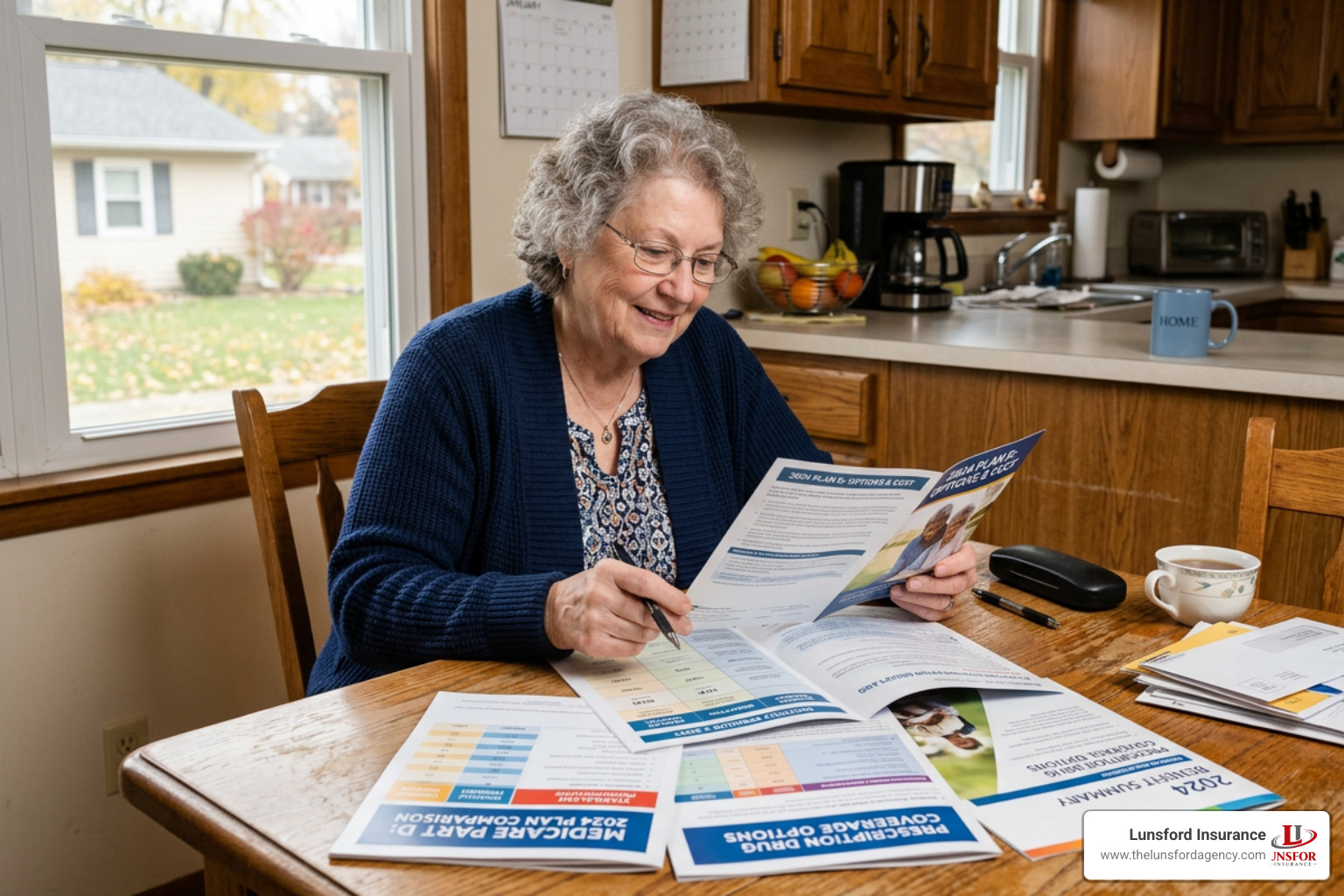
When shopping for standalone PDPs, your options vary depending on your county. In larger, highly populated counties like Franklin County (Columbus) and Cuyahoga County (Cleveland), residents typically have a choice of 16 or more standalone plans, whereas options may be more limited in other parts of the state.
Several major plans command a large share of enrollment in the Buckeye State. For example, leading standalone prescription drug plans in Ohio typically enroll hundreds of thousands of members. Other popular choices may also attract tens of thousands of residents.
To see a complete list of your options, you can review the official 2026 Medicare Part D Stand-Alone Prescription Drug Plans registry. Premiums and deductibles fluctuate significantly by county and ZIP code; while some basic plans may offer premiums under $10, more comprehensive plans with $0 deductibles can feature premiums exceeding $120. These figures serve as examples of the wide variation across different regions rather than fixed statewide rates.
How the Inflation Reduction Act Lowers Your Costs
The Inflation Reduction Act has introduced significant improvements to Medicare drug coverage. Beyond the $2,000 out-of-pocket cap, the law typically provides several key cost-saving benefits:
- Insulin Copay Cap: Any insulin product on your plan’s formulary is typically capped at a maximum copay of $35 for a one-month supply.
- Free Vaccines: Recommended adult vaccines, including the shingles vaccine, are typically covered at a $0 copay.
- Elimination of the Coverage Gap: The “donut hole” is officially gone, typically replaced by a transition directly to the catastrophic phase once you hit the out-of-pocket limit.
- Medicare Prescription Payment Plan: This program typically allows you to spread your out-of-pocket drug costs into monthly installments throughout the year, helping you manage high upfront costs.
Avoiding Penalties and Enrolling in Ohio
Timing is typically important when it comes to Medicare. If you do not enroll in a drug plan when you are first eligible—and you do not have other “creditable” drug coverage (like an employer plan)—you may face a permanent late enrollment penalty. This penalty typically adds 1% of the national base beneficiary premium for every month you went without coverage, which is added to your premium for as long as you have Part D.
You can typically enroll or change plans during these key windows:
- Initial Enrollment Period (IEP): Typically the 7-month window surrounding your 65th birthday.
- Annual Enrollment Period (AEP): Every year from October 15 to December 7, you can typically compare and switch plans for the upcoming year.
- Special Enrollment Period (SEP): Typically triggered by qualifying life events, such as moving out of your plan’s service area or losing employer-sponsored coverage.
To ensure you enroll at the right time and avoid penalties, explore our comprehensive Services – Medicare page.
Qualifying for Extra Help in Ohio

If you have limited income and resources, you may qualify for the federal Extra Help program (also known as the Low Income Subsidy). This program is worth an estimated $6,200 per year and typically helps pay for your monthly premiums, annual deductibles, and prescription copays.
The Social Security Administration typically determines eligibility based on annual income limits and resource thresholds. If you think you might qualify, you can typically apply online through Social Security or seek free, personalized assistance from the Ohio Senior Health Insurance Information Program (OSHIIP).
Conclusion: Securing Your Prescription Coverage
Finding the right medicare part d ohio plan does not have to be a headache. By looking closely at your specific medications, choosing a plan with your preferred pharmacy in its network, and taking advantage of the new 2026 consumer protections, you can keep your healthcare costs manageable.
If you need assistance navigating these choices, professional guidance can help you compare plans and find a suitable fit for your health and budget. To explore your options further, feel free to visit our Lunsford Insurance Services page.
Coverage, eligibility, and limits depend on the specific product, situation, and Ohio regulations.